Skin Cancer Risks for Outdoor Workers: What People Need to Know
Outdoor workers across Cardinia Shire face a higher risk of skin cancer than most people realise. This article covers what that risk looks like day to day, the types most common in this group, the warning signs to watch for, and when to book a professional check in or near Koo Wee Rup, VIC.
Why Outdoor Workers Face a Higher Skin Cancer Risk
UV radiation is the primary cause of skin cancer, and outdoor workers receive far more of it than most. SunSmart Victoria has warned that "outdoor workers could be exposed to up to 10 times more UV exposure yearly than indoor workers." For people working on farms, building sites, and market gardens across Cardinia Shire, that exposure accumulates across every season, not just summer. UV damage is present even on cool or overcast days, meaning a typical winter week on an open paddock near Lang Lang or Pakenham carries real risk.
Koo Wee Rup and the surrounding flat agricultural land of the western Gippsland corridor offer little natural shade. Workers in horticulture, cropping, irrigation, and rural contracting often spend full days in open sun. Light-coloured paddock surfaces can reflect UV radiation back toward exposed skin, compounding the effect of long hours in open landscapes.
The Three Most Common Types of Skin Cancer in Outdoor Workers
Basal cell carcinoma (BCC) is the most frequently diagnosed type. It tends to appear as a pale or pink lump, often on the face, neck, or ears. It rarely spreads but can cause significant local damage if left untreated, and is closely linked to long-term cumulative sun exposure.
Squamous cell carcinoma (SCC) typically develops on the back of the hands, forearms, scalp, and lips. It can sometimes spread to nearby lymph nodes, so early detection matters. People who work outdoors in agricultural settings around Lang Lang and Pakenham accumulate the kind of repeated UV exposure associated with SCC.
Melanoma is less common but far more serious. It can develop anywhere on the body, including areas not regularly exposed to direct sunlight, and can spread rapidly if not caught early. Early detection makes a significant difference to outcomes.
Warning Signs to Watch for
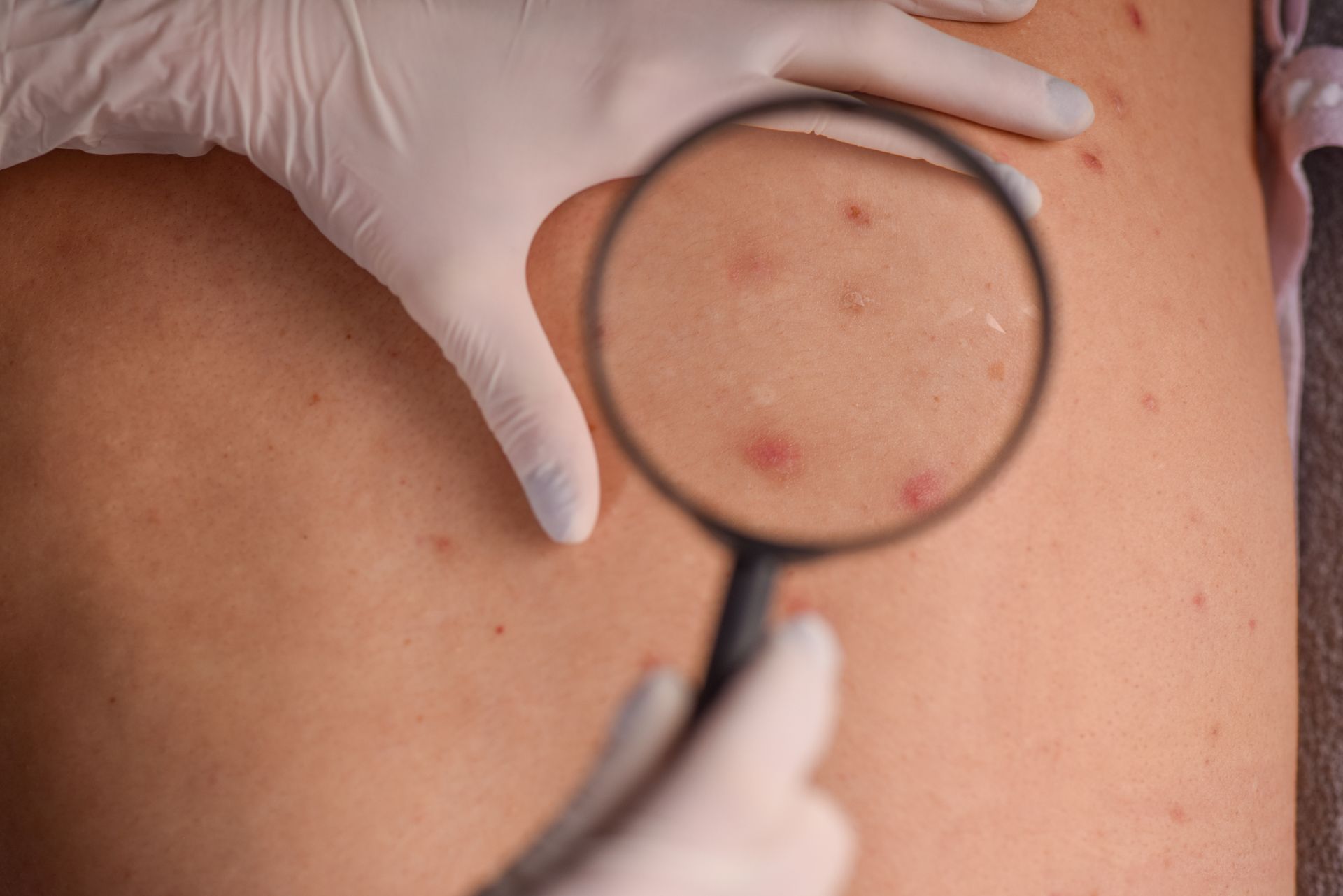
For BCC and SCC, look out for spots or sores that do not heal, crusty or bleeding patches, or any raised, firm bump in a sun-exposed area. These can be easy to dismiss as minor irritations, but they often persist and slowly change over time.
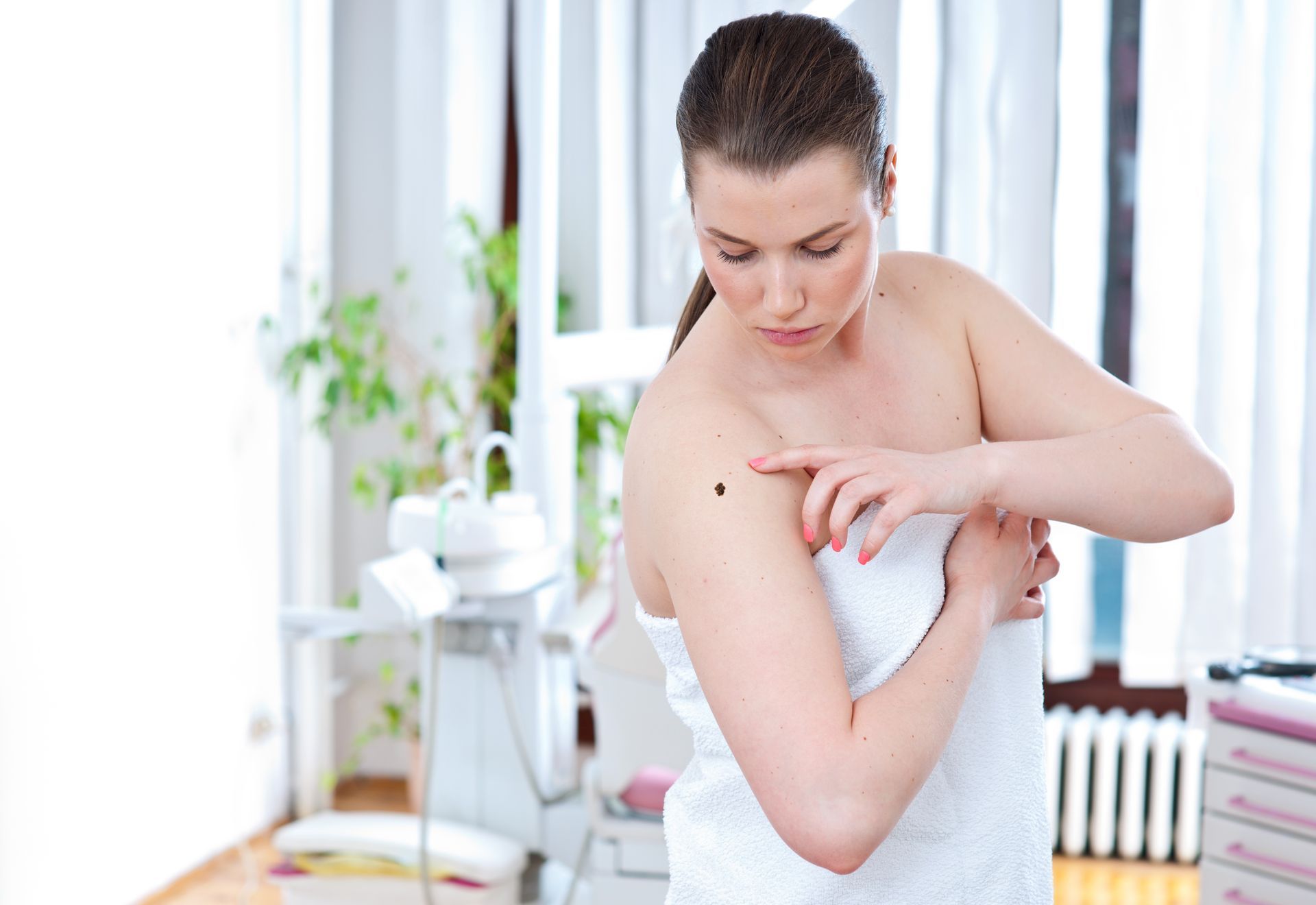
For melanoma, doctors commonly use the ABCDE guide: Asymmetry, Border, Colour, Diameter, and Evolution. A spot worth reviewing may be asymmetric, have an irregular or ragged border, show uneven colour, be larger than about 6 millimetres, or be changing in shape, size, or sensation.
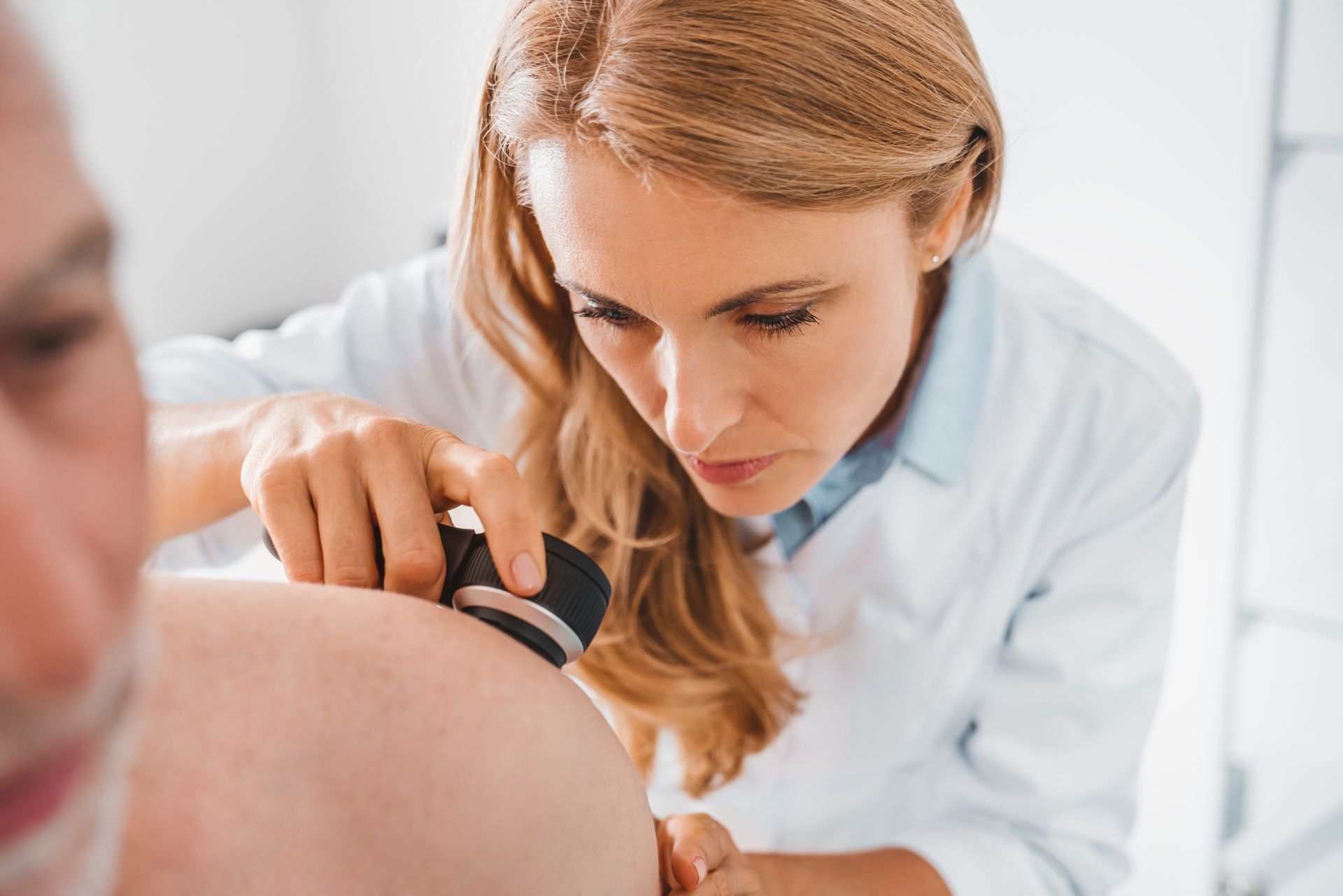
Self-checking is a useful habit, but it has limits. A trained doctor using a dermatoscope can identify lesions the naked eye may miss entirely. Many workers put off a check because nothing looks obviously wrong. That is one of the most common and costly assumptions in skin health.
Which Spots Are Most Likely to Be Missed?
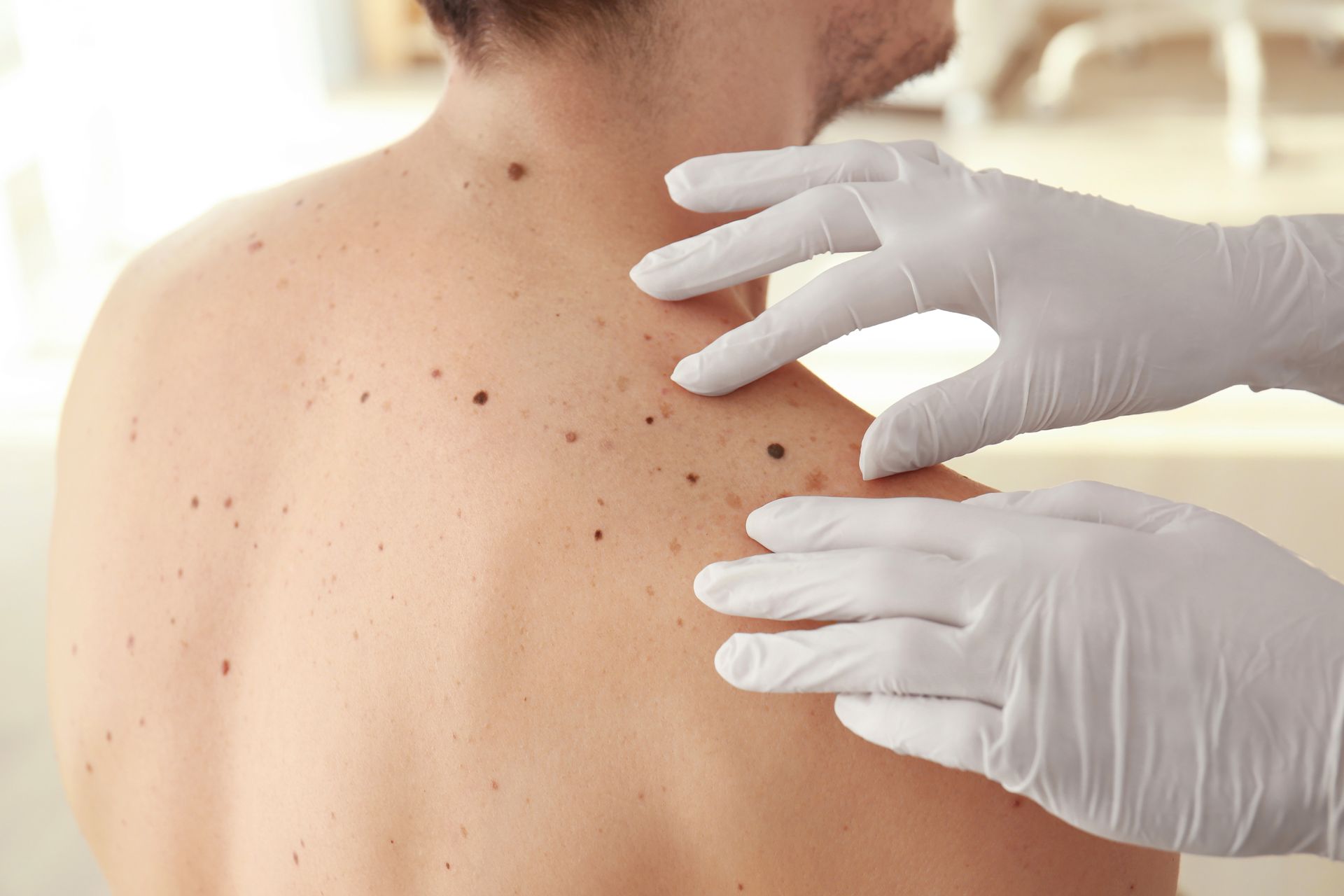
Areas that are regularly covered but occasionally exposed can be overlooked during self-checks, including the back, shoulders, and the back of the neck where collars gap. Workers who wear hats may still develop lesions on the ears, nose, and neck. Ask a partner or GP to check areas you cannot easily see yourself.
When Should Outdoor Workers Book a Skin Check?
Outdoor workers in Cardinia Shire should consider booking a check at least once a year, and sooner if any new or changing spot appears. Workers over 40 with many years outdoors, those with fair skin or a history of sunburn, and anyone who has previously had a BCC or SCC removed may benefit from more frequent reviews. No referral is required to book directly with a specialist clinic.
Practical Sun Protection for Workers in the Field
Sun protection goes beyond applying sunscreen in the morning. Reapplication every two hours during outdoor work is important, particularly in the warmer months.
Protective clothing including long-sleeved high-UPF rated shirts, wide-brimmed hats, and UV-blocking sunglasses can reduce exposure significantly. Hats should shade the face, neck, and ears. Where work allows, rescheduling tasks during the peak UV window of 10am to 2pm is worth considering. Employers across Cardinia Shire also share responsibility under Victorian health and safety legislation to help reduce workers' UV exposure on the job.
A layered approach combining clothing, shade, timing, and regular checks is the most effective strategy
Take the Next Step for Your Skin Health
Skin cancer is highly manageable when found early. Outdoor workers in and around Koo Wee Rup, Lang Lang, and Pakenham have access to specialist care closer than many realise.
Icarus Skin Cancer Clinic is located in Koo Wee Rup, VIC, and provides expert detection and treatment for patients across the Shire of Cardinia, Casey, and surrounding areas. The clinic uses the FotoFinder Vexia digital dermoscopy system to examine lesions with precision. A range of skin cancer treatment services are available, including biopsies, excisions, cryotherapy, and photodynamic therapy, with experienced doctors focused on minimally invasive approaches and good cosmetic outcomes.
No referral is required. Call the clinic on
03 5925 2000 to book your appointment, or book online at your convenience. You can also find the team and read community reviews via
Icarus Skin Cancer Clinic on Google.